
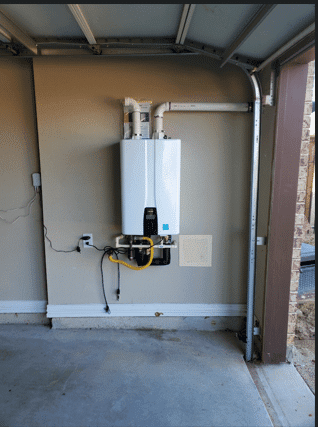
If your tankless unit is emitting an odor, showing rust, or you suspect a leak, the fastest path to comfort is figuring out whether it is a water quality problem, venting or combustion issue, or a plumbing connection that needs attention. This guide helps you identify what to check and when to call a local professional in The Colony, TX.
Last week, you notice a strange “metallic” or sulfur-like smell near your tankless water heater, and a few spots of rust start showing up around the unit. Then, later that day, a damp area appears where the wall meets the piping.
That combination can be unsettling because tankless systems rely on precise water flow and safe venting. This guide will help you understand the most common causes behind bad smells, rust, and leaks, what you can check safely at home, and what to expect when a plumber inspects the unit and connections in The Colony, TX.
- Quick answer
- What to check first
- Main things customers should understand
- Why this matters in The Colony, TX
- Common mistakes to avoid
- Customer checklist
- Frequently asked questions
Quick Answer
If you smell something unusual, see rust, or notice moisture around a tankless water heater, pause and inspect the area for obvious signs of leaks or blocked venting, then call for professional plumbing leak detection. Bad odors can come from water quality issues, pipe debris, or combustion/vent problems, while rust and dampness often point to a failing seal, fitting, or internal component. In The Colony, TX, where homes may have varied plumbing layouts, the safest approach is to have the unit and piping checked before you keep running it or attempt DIY disassembly. ENCO Plumbing, Inc. can help troubleshoot and repair the source.
What to Check First
Start with simple, low-risk checks that help narrow the cause without taking the unit apart. Tankless heaters are sensitive, so you want to confirm whether the issue is coming from water, the venting pathway, or a connection point.
1) Look for the source of moisture
Check the floor, nearby wall seams, and the piping connections for active drips or dampness. Fresh water trails often indicate a leak, while older staining can point to a slow seep that has been happening for a while.
2) Pay attention to the odor type
Note whether the smell seems more like “rotten egg” (often associated with sulfur in the water), “burning” (combustion-related), or “musty” (stagnant water or condensation). This detail helps a plumber diagnose faster.
3) Check venting visibility (no disassembly)
If the vent termination area is accessible, confirm it is not blocked by debris. Do not remove panels or alter vent components. If you are unsure, skip to a professional inspection.
Main Things Customers Should Understand
Bad smell, rust, and leaks can overlap, but they usually connect back to a few root categories: water-side issues, venting or combustion concerns, and plumbing connection failures. A proper inspection identifies which category is driving your symptoms.
Professional observation: When tankless units are involved, rust and dampness are rarely “cosmetic.” Even small leaks can lead to bigger water damage, and odor complaints can be linked to flow problems or venting performance that should not be ignored.
Water-side causes (common with tankless)
Tankless systems heat water on demand, so if water flow is restricted or the system is dealing with mineral buildup, you may notice performance changes and odor issues. Mineral deposits can also promote corrosion at certain connection points, especially if there are older fittings or if the system has been exposed to repeated temperature swings.
Rust and leaking around fittings
Rust stains near the unit are often a clue that water is escaping at a joint, gasket, or internal seal. Sometimes the leak is subtle and only shows up after the unit runs. If you see rust patterns that align with a specific fitting or seam, that is valuable information for your plumber during diagnosis.
Combustion and venting concerns
Some tankless odors can be related to venting or combustion. If the smell resembles burning, exhaust, or “chemical” notes, treat it as a safety concern and avoid extended operation until it is checked. Venting problems can also contribute to condensation that leaves moisture where it should not be.
Why plumbing diagnosis matters
Odor complaints can be misleading. For example, a leak may cause dampness in nearby materials that produces a musty smell, while the leak itself is coming from a plumbing connection unrelated to the odor source. That is why plumbing leak detection services can be the difference between guessing and solving the issue efficiently.
| What you notice | Likely category | What to do next |
|---|---|---|
| Rust stains plus damp wall or floor | Connection or seal leak | Inspect the piping area for active moisture and schedule plumbing leak detection services. |
| “Rotten egg” odor during hot water use | Water quality or tankless heating byproduct | Stop chasing the smell with cleaners and have the water side checked as part of water heater services. |
| Burning or exhaust-like smell | Vent/combustion concern | Do not continue running until a qualified plumber inspects the venting performance and unit setup. |
| Odor returns after repeated use | Flow restriction or buildup | Ask about tankless water heater repair diagnosis, including checking for performance-related issues. |
Why This Matters in The Colony, TX
In The Colony, TX, many homes have established plumbing runs and mixed-age components, which means a tankless unit can reveal problems that were previously minor. When a system heats water on demand, temperature changes and higher flow demand can expose weak seals at joints or make condensation more noticeable. If you are also dealing with older ducted or enclosed mechanical areas, odor concerns can travel through nearby spaces, making it harder to pinpoint the exact source. That is why a careful inspection that focuses on both the unit and the surrounding plumbing connections matters.
Local tip for homeowners: If the odor or moisture shows up only after a shower or a specific sink is used, note which fixture triggers it. That detail helps narrow the affected supply line and speeds up troubleshooting.
Get tankless diagnostics from ENCO Plumbing, Inc.
If you are seeing rust, smelling something unusual, or suspecting a leak around your tankless water heater, ENCO Plumbing, Inc. can evaluate the unit and plumbing connections and recommend the right next step.
(214) 222-4464Common Mistakes to Avoid
When tankless heaters show warning signs, homeowners often try fixes that can delay the real solution or even create additional damage. Avoid these common missteps so you can protect your home and get the correct repair.
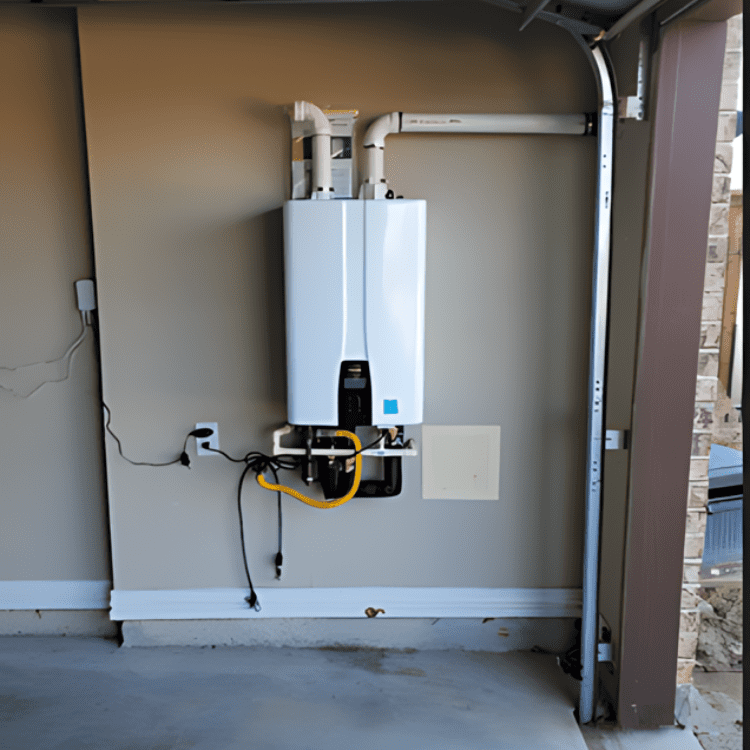
- Ignoring moisture behind the unit. Small leaks can lead to wall damage and recurring odor problems.
- Continuing to run the system during a strong burning or exhaust-like smell. If venting or combustion performance is involved, extended operation is not the safer choice.
- Scrubbing rust without finding the leak. Surface cleaning does not stop the source, and the problem usually returns.
- Assuming the odor is “just hard water.” Water quality issues can play a role, but odors can also be caused by leaks, buildup, or venting concerns.
- Attempting DIY disassembly of the tankless unit. Tankless systems require correct handling of components and connections.
Customer Checklist
Use this checklist before you call so your plumber can narrow the diagnosis quickly. Even a few notes can help align the inspection with what you are seeing at home in The Colony, TX.
Before the call
- When did you first notice the smell, rust, or moisture?
- Does it happen only during hot water use, or even when the unit is idle?
- Where exactly do you see rust or dampness (floor, wall seam, around a fitting)?
- What fixtures trigger it most (showers, kitchen sink, laundry)?
What to document
- Any visible water trails or pooling
- Whether the odor changes after the unit cycles
- Any recent plumbing changes (repairs, fixture installs, recirculation setup changes)
Questions to ask
- What is the likely source: water-side, connection leak, or venting/combustion?
- Would plumbing leak detection help confirm the location?
- Is this a tankless water heater repair issue or a water heater services issue?
Representative Scenario: The Colony, TX homeowner with a recurring odor
A homeowner in The Colony noticed a sulfur-like odor during showers. Over a few days, rust-colored spotting appeared near the tankless unit’s water connections. The smell did not appear when only cold water ran. ENCO Plumbing, Inc. would typically start by checking for moisture and tracing the hot water path to confirm where the leak or condensation was coming from. After identifying the affected connection, the repair focus shifts to stopping the leak and preventing the odor from returning because of damp materials or ongoing water-side issues.
Frequently Asked Questions
Is a bad smell from a tankless water heater always a leak?
No. Odors can originate from different places: water quality issues, buildup that affects heating, damp materials from a slow leak, or venting or combustion concerns. If the smell is strongest during hot water use, it can point toward water-side behavior. If it feels like burning or exhaust-related, treat it as a safety issue and have the system inspected before continuing regular use.
Why do I see rust around the unit?
Rust near a tankless water heater is often a sign that moisture is escaping at or near a fitting, gasket, or seal. Tankless systems run hot water through specific connection points, and small failures can show up as staining that grows over time. The goal is to find the active source of water, not just clean the surface.
What’s the safest first step if I suspect a leak?
Stop guessing and focus on safe observation. Look for visible moisture trails and note when the issue happens, such as during showers or kitchen sink use. Avoid disassembling the unit. The most efficient next step is professional plumbing leak detection services so the plumber can confirm the exact location and repair the root cause.
Can clogged drains cause tankless water heater odor problems?
They can contribute, but they are not the most common direct cause. A clogged drain can cause wastewater odors to back up near fixtures, which may make it seem like the tankless unit is the source. If odors are tied to a specific fixture, it may be a kitchen drain repair contractor or drain clearing issue. If odors follow hot water usage across multiple fixtures, the tankless unit and its water-side connections are more likely.
Should I try flushing the tankless unit myself?
Home flushing may be appropriate in some situations, but it is not the best first move when you are also seeing rust or moisture. If there is an active leak, flushing can delay proper repair or mask the real problem. A plumber can assess whether you need tankless water heater repair, leak detection, or another water heater services step before proceeding.
Ready to stop the smell and protect your home?
ENCO Plumbing, Inc. helps homeowners across The Colony, TX and nearby areas with tankless water heater diagnosis, plumbing leak detection, and water heater repair and replacement when needed. If your tankless unit is showing rust or you suspect a leak, contact us so we can identify the source and recommend the right repair.
Visit ENCO Plumbing, Inc.
ENCO Plumbing, Inc.
ENCO Plumbing, Inc. is a local plumbing company serving The Colony, TX and surrounding areas. From water heater services to plumbing leak detection and tankless water heater repair, our goal is to help you restore safe, reliable hot water by addressing the actual cause, not just the symptoms.
Explore related services: plumbing leak detection, water heater repair, tankless water heater repair, water line repair.